Why Regular Service and Maintenance of Oil Spill Response Equipment Matters
13th Aug 2026When an oil spill happens, equipment failure is not an option
Oil spill response equipment is often stored for long periods before being called into action. Unlike equipment used every day, oil containment boom systems, oil recovery skimmers, power packs, reels, tanks, and ancillary response equipment can remain unused for months or even years between deployments. While this may seem beneficial, prolonged periods of inactivity can lead to deterioration, corrosion, damage, and hidden faults.
When an oil spill occurs, responders need complete confidence that their equipment will function immediately and reliably. A poorly maintained boom seized hydraulic component, damaged hose, or failed control system can significantly reduce response effectiveness and increase the environmental and financial consequences of a spill.
Regular inspection, servicing, and maintenance are therefore critical elements of any oil spill preparedness strategy.
The hidden risks of not maintaining equipment
Even equipment stored in what appears to be ideal conditions can deteriorate over time. Common issues include:
- Corrosion of metal components
- UV degradation of boom fabrics and flotation materials
- Hydraulic hose deterioration and leaks
- Seal and gasket failures
- Electrical faults and battery degradation
- Damage caused by handling, transportation, or storage
- Fouling and contamination from previous deployments
Many of these problems are not immediately visible during a simple visual inspection. Without routine maintenance, organisations may only discover faults when equipment is deployed during an emergency, when it is too late to address them effectively and this can compromise an effective oil spill recovery operation.
Protecting Your Investment
Oil spill response equipment represents a significant capital investment. Well-maintained equipment can remain operational for many years beyond its expected service life, delivering greater value and reducing the need for premature replacement.
Regular maintenance helps:
- Extend equipment lifespan
- Reduce long-term operating costs
- Minimise unexpected repair expenses
- Maintain operational readiness
- Preserve equipment performance
- Improve reliability during emergency response operations
Scheduled servicing is often considerably less expensive than emergency repairs or equipment replacement following a failure.
Maintaining compliance and Preparedness
Many ports, terminals, industrial facilities, offshore operators, and shipping organisations are required to maintain oil spill response capability as part of their environmental responsibilities and contingency planning arrangements.
Routine maintenance provides documented evidence that equipment has been inspected, tested, and maintained in accordance with operational requirements. Service records can support audits, regulatory inspections, and internal preparedness reviews while demonstrating a commitment to environmental protection.
What should be included in a maintenance programme?
An effective oil spill equipment maintenance programme should include a visual inspection, functional testing, repairs and refurbishment and preventative maintenance to ensure that equipment is ready for deployment at any time. There are also safety critical components to maintain to protect your team. Key components include the following:
Oil recovery skimmer servicing:
Engineers should conduct a detailed inspection of all mechanical, hydraulic, and structural components, assessing the condition of discs, brushes, scrapers, bearings, drive systems, hydraulic hoses, motors, seals, couplings, and discharge assemblies. This proactive approach identifies wear, damage, corrosion, and potential failures before they impact operational capability. Regular visual inspections help identify signs of wear, damage, corrosion, and deterioration before problems become critical and parts can be repaired or replaced as required.
Power pack servicing
Engineers should perform a detailed inspection and maintenance of all critical engine, hydraulic, fuel, electrical, and structural systems. This includes the replacement of key service items such as engine oil, filters, belts, coolant, and hydraulic filtration components, alongside thorough assessment of hoses, connections, batteries, safety devices, gauges, cooling systems, and control assemblies.
Preventive maintenance activities identify wear, contamination, leaks, and developing faults before they result in equipment failure. Critical safety features, including overspeed shutdown systems, guards, lifting arrangements, and operational controls, are tested and verified to maintain safe and reliable operation in demanding environments.
Following servicing, the power pack undergoes comprehensive operational testing to validate system performance, hydraulic functionality, operating temperatures, and overall equipment condition. This process ensures the unit is fully prepared for immediate deployment and capable of delivering dependable hydraulic power to associated recovery equipment..
Oil containment boom servicing and maintenance
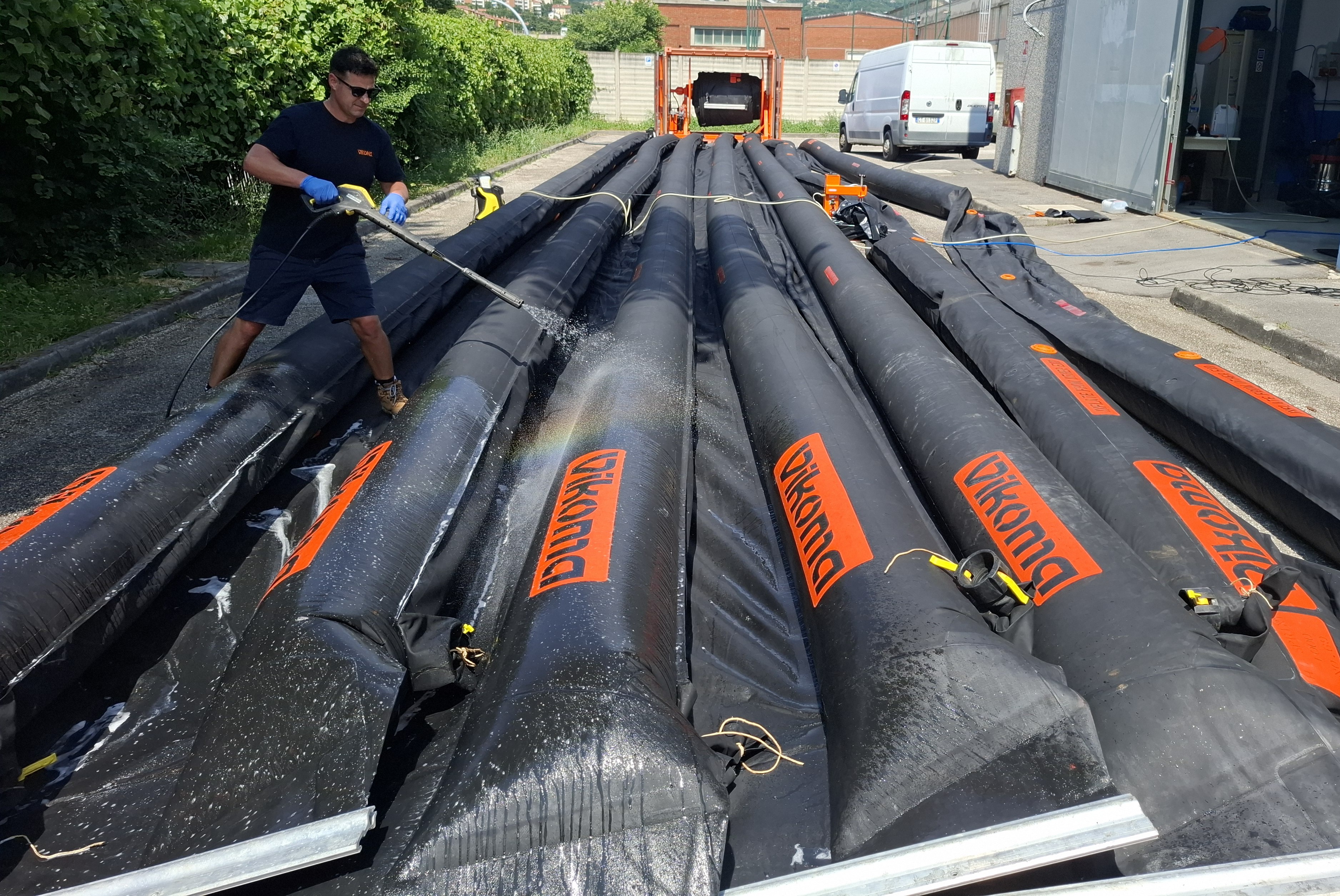
Engineers should carry out a detailed inspection of the boom fabric, flotation chambers, ballast systems, valves, tow bridles, lifting points, and connection hardware to identify signs of wear, damage, corrosion, or deterioration before they impact operational capability.
Each boom should be inflated to its specified working pressure and subjected to leak testing to verify air retention, buoyancy performance, and overall integrity. Critical components, including relief valves, ballast assemblies, shackles, anchor points, and towing arrangements, are inspected to ensure they remain fit for service in demanding marine environments.
Where minor defects are identified, corrective actions can be undertaken to restore operational condition and prevent further deterioration.
Boom reel servicing
Engineers should conduct a detailed inspection of the reel assembly, hydraulic systems, drive components, lifting arrangements, and protective storage containers. Critical elements including hydraulic hoses, couplings, gearbox assemblies, bearings, vibration mounts, lifting points, shackles, and structural components are assessed for wear, corrosion, damage, and operational integrity.
Where fitted, diesel-powered drive systems should receive a complete service, including replacement of engine oils, filters, and air filtration components, together with inspection of fuel systems, batteries, and overspeed protection devices. This proactive maintenance approach helps prevent unexpected failures and ensures dependable performance in demanding operating environments.
Oil storage tanks
Tanks should be inspected to verify their structural condition, corrosion protection, ventilation systems, access doors, seals, and handling interfaces. Maintaining container integrity helps protect valuable response equipment from environmental degradation while extending overall asset life.
The benefits of manufacturer servicing
While routine inspections can often be carried out by equipment owners, periodic servicing by the original manufacturer or an authorised service provider offers additional advantages.
Manufacturer service teams have:
- Specialist product knowledge
- Access to genuine replacement parts
- Experience identifying developing issues
- The ability to undertake performance testing and certification
- Insight into product upgrades and improvements
This expertise helps ensure equipment continues to perform in accordance with original design specifications. Vikoma has an expert team of engineers available to service equipment.
Preparedness is key to effective an oil spill recovery operation
The effectiveness of an oil spill response depends not only on having the right equipment but also on ensuring that equipment is fully operational when required. Time is money when responding to a spill and the cost of clean up increases significantly if response is not initiated quickly.
Regular service and maintenance provides assurance that response systems will perform as expected, helping organisations protect people, assets, and the environment when an incident occurs.
A proactive maintenance programme is not simply a good housekeeping exercise. It is a critical component of oil spill preparedness and a cost-effective way to safeguard both operational capability and long-term investment.
Need support maintaining your oil spill response equipment?
Vikoma's experienced service team provides inspection, maintenance, repair, refurbishment, and operational testing for a wide range of oil spill response equipment including containment booms, skimmers, transfer pumps, power packs, reel systems, storage tanks, beach cleaning equipment.
Vikoma’s specialist service engineers carry out detailed inspections of mechanical, hydraulic, electrical, structural, and safety-critical systems, identifying wear, damage, corrosion, contamination, and developing faults before they impact operational capability. They can provide functional testing to verify performance, efficiency, and deployment readiness. Whether validating containment integrity, hydraulic performance, pumping efficiency, electrical functionality, recovery capability, or storage security, the service programme ensures equipment remains ready to respond in demanding operational environments.
Whether you require an annual service programme or a full equipment assessment, we can help ensure your equipment remains ready for deployment whenever it is needed.
Contact our the Vikoma sales team to discuss your requirements.